Demonstrating the real impact of changes
How Streets For All San Francisco is helping the SFMTA prove the value of their traffic calming programme
Key information
- Sensor and data hosting
- Long-term monitoring
- Infrastructure implementation (bike lanes, ...)
- Traffic safety
- Speed monitoring
The City of San Francisco, via their Metropolitan Transport Authority (SFMTA) started a programme of traffic calming though the installation of "speed cushions" and was looking for ways to gather monitoring and evaluation data on their effectiveness.
This programme was aligned with the goals of a local non-profit safety campaign called Streets For All San Francisco (https://www.streetsforallsf.org/) who offered to get involved to gather this information, and involve the local community in the planning and monitoring. The campaign purchased 20 Telraam S2 devices to carry out these studies, and the SFMTA shared details of the target locations they were interested in.
The devices are now spread around San Francisco at a number of locations, monitoring both car volumes and speed to either collect a traffic baseline, identify problem areas, or, as in this case, to evaluate the impact of changes.
One street can make a difference
Two devices were placed on a single street segment, but at different ends. Device 1 was placed on the end near the junction with the main road, where there was therefore a speed issue. Device 2 was placed on the other end, showing the effective speed once the car has travelled further along this minor, local road.
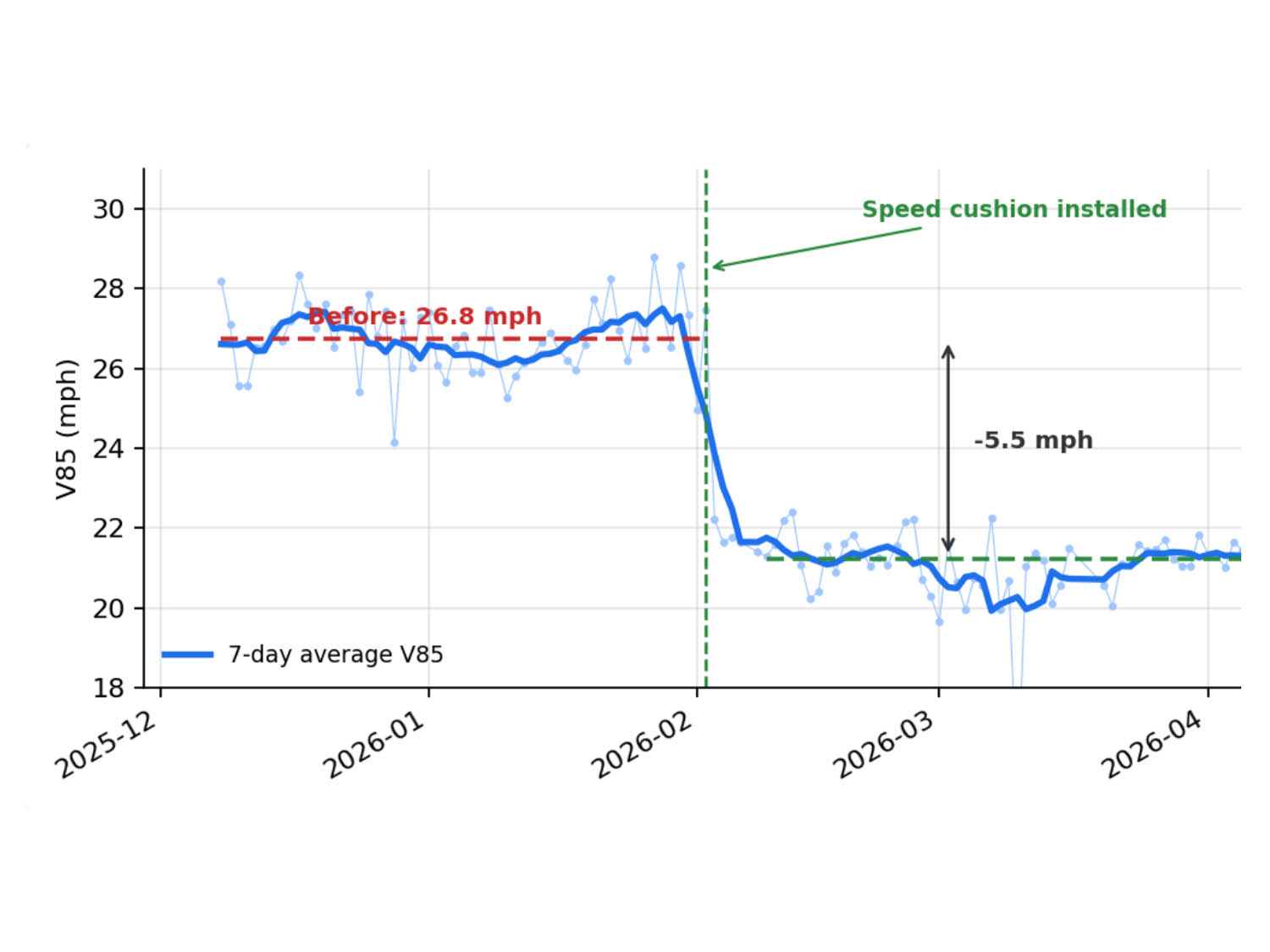
At the start of the data gathering in December 2025, before the speed cushion was installed, V85 speeds for Device 1 were 26.8mph compared to only 21mph for Device 2. In the faster section, 24% of cars were travelling more than 25mph, and 5% were over 31mph.
In February, the SFMTA installed the speed cushion around the location of Device 1. The speeds changed immediately. The V85 dropped from 26.8mph to only 21.2mph, and this was because only 5% were now travelling at more than 25mph, and just 0.9% staying above 31mph.

The real value here is the safety and quality of life impact of a 20%+ reduction in speed through one simple, and cheap, intervention. However, the wider value of this study is the ability of the City, its transportation professional staff, and also the politicians, to demonstrate to residents and voters that these measures work, that they deliver value for money, and that the City is achieving their mobility goals and Vision Zero commitments.
Want to know more about this project?
Feel to free to get in touch.