Dublin students explore active travel with Telraam
How primary school pupils across five Dublin schools used Telraam data to investigate traffic and air quality on their doorsteps, and even pitched their findings to the Lord Mayor.
Key information
- Sensor and data hosting
- Citizen Engagement
- School street
- Air quality
Client need / objectives
The aim of The Sensor Inspector was not simply to collect another set of traffic numbers. The Academy of the Near Future (ANF), Trinity College Dublin and Dublin City Council wanted to put the data, and the questions behind it, directly into the hands of the young people most affected by it: the children walking, cycling and being driven to school every day.
The programme set out to:
- Build everyday data literacy: give 3rd to 6th class pupils a hands-on, age-appropriate way to understand how sensors, traffic counts and air quality readings actually work.
- Make the link between traffic and air quality visible: pair Telraam traffic counts with air quality sensors so pupils could see, in their own data, how the two are connected around their schools.
- Give pupils a voice in active travel: equip them to identify the issues on their own streets and propose practical ideas to make walking and cycling safer and more attractive.
- Bring those ideas to decision-makers: translate the pupils' work into a credible contribution to Dublin's active travel conversation.
Telraam's role
Four Telraam devices were placed in classroom windows across the five participating schools (St. Joseph's Primary Fairview, Howth Road National School, St. Columba's National School, Harold's Cross National School, and Scoil Chaitríona Baggot Street) counting pedestrians, cyclists, cars and heavier vehicles, and recording speeds, hour by hour, throughout the study period.
Pupils could look at the Telraam counts side by side with the air quality data provided by classroom sensors and the project team. During a series of four interactive workshops, run by ANF and Trinity researchers, the children moved from "what is a sensor?" through to "what is the data on my street actually telling me?" and then on to "what could we change about it?".
Because Telraam's dashboard is open and free to view, teachers and pupils could keep coming back to the data between workshops, compare quiet streets with busier ones, and notice patterns around school start and finish times.
Outcome
The pupils, aged 7–11, used what they found to build their own reports and mini-campaigns for safer, healthier streets around their schools covering everything from congestion at the school gate to where active travel routes could be improved.
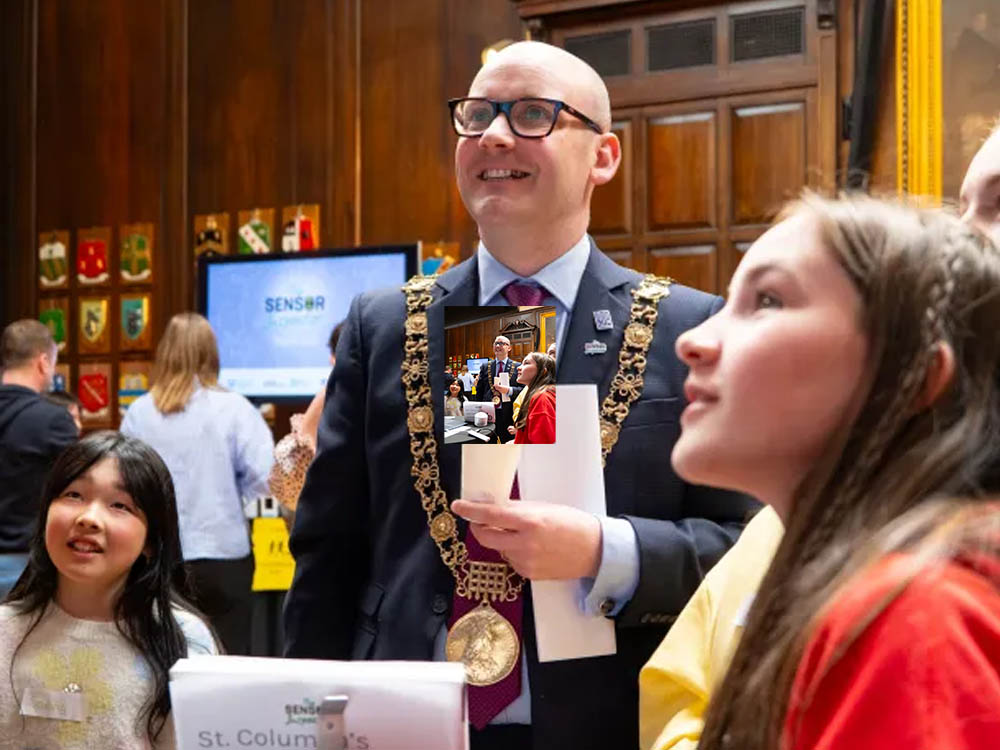
The programme closed with a showcase event at the Mansion House, where the children presented their findings to local stakeholders and decision-makers, including the Lord Mayor of Dublin, Councillor Ray McAdam, who praised the pupils' work and the way they engaged with active travel in their own communities.
It is inspiring to see young people across Dublin engaging so thoughtfully with the challenges and opportunities of active travel. Through The Sensor Inspector, students are not only learning about air quality, traffic and sustainability, but are contributing ideas that can help shape safer, healthier streets in their own communities. Empowering children to understand and influence how our city moves is an investment in Dublin’s future.
For Telraam, it was a reminder of something we keep seeing across our networks: when residents, including the youngest ones, have access to their own street's data, the conversation about mobility moves on from anecdote to evidence, and the people most affected get to take part in shaping what happens next.
The programme is part of The Sensor Inspector, a citizen science initiative delivered by the Academy of the Near Future (ANF), a smart-cities education programme run by Dublin City Council and the CONNECT Research Ireland Centre at Trinity College Dublin, together with Dublin City Council's Active Travel Programme Office. Trinity College Dublin funded the classroom sensors through its Research Boost Programme. Telraam supplied four traffic counters that sat alongside the air quality sensors used by the schools.
Find out more
- Watch the Sensor Inspector Showcase video
- Academy of the Near Future: nearfuture.ie
- Dublin City Council press release: Dublin Students Explore Active Travel and Air Quality Through 'The Sensor Inspector'
- Smart Dublin write-up: Sensor Inspector in Action: Dublin Primary School Students Reimagine Active Travel
Cover photo courtesy of Mariana Chihenseck Blanco and Dublin City Council
Want to know more about this project?
Feel to free to get in touch.