Traffic estimates tested in a village centre
Filling the blind spot on provincial roads, what's really driving through Diessen?
Key information
- Sensor and data hosting
- Sensor installations
- Long-term monitoring
- Citizen Engagement
- Speed monitoring
- Traffic safety
A blind spot in the counting network
The Province of North Brabant (Netherlands) counts traffic on its provincial roads at fixed and temporary locations, but not within built-up areas. A village centre has many side streets and a lot of local traffic, so no single counting point is ever representative. Counting equipment is also hard to install there among pavements, parking bays, trees and lampposts. Traffic on these stretches is therefore estimated: the average of the counted road sections on either side of the village, plus 10% for internal traffic. The question was simple: how accurate is that estimate, and how much does traffic vary within a village centre?
"In village centres we've always had to estimate traffic, because counting there is so difficult. With Telraam, we were able to actually measure it for the first time. The data matched our radar counts closely and showed that our estimate for Diessen was too high." – Peter de Wolff, Policy Officer, Traffic and Transport Information, Province of North Brabant
Seven sensors along the main street
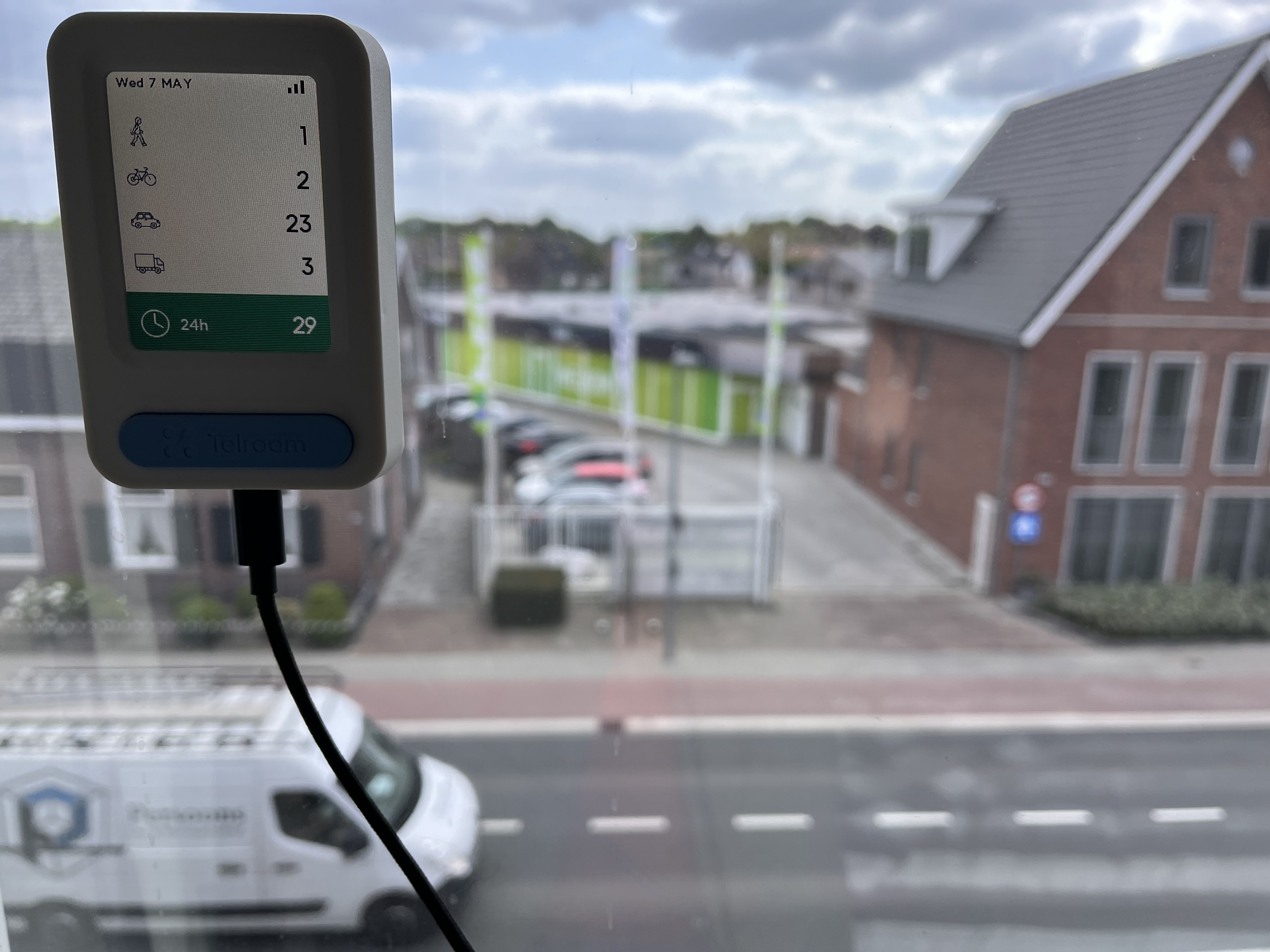
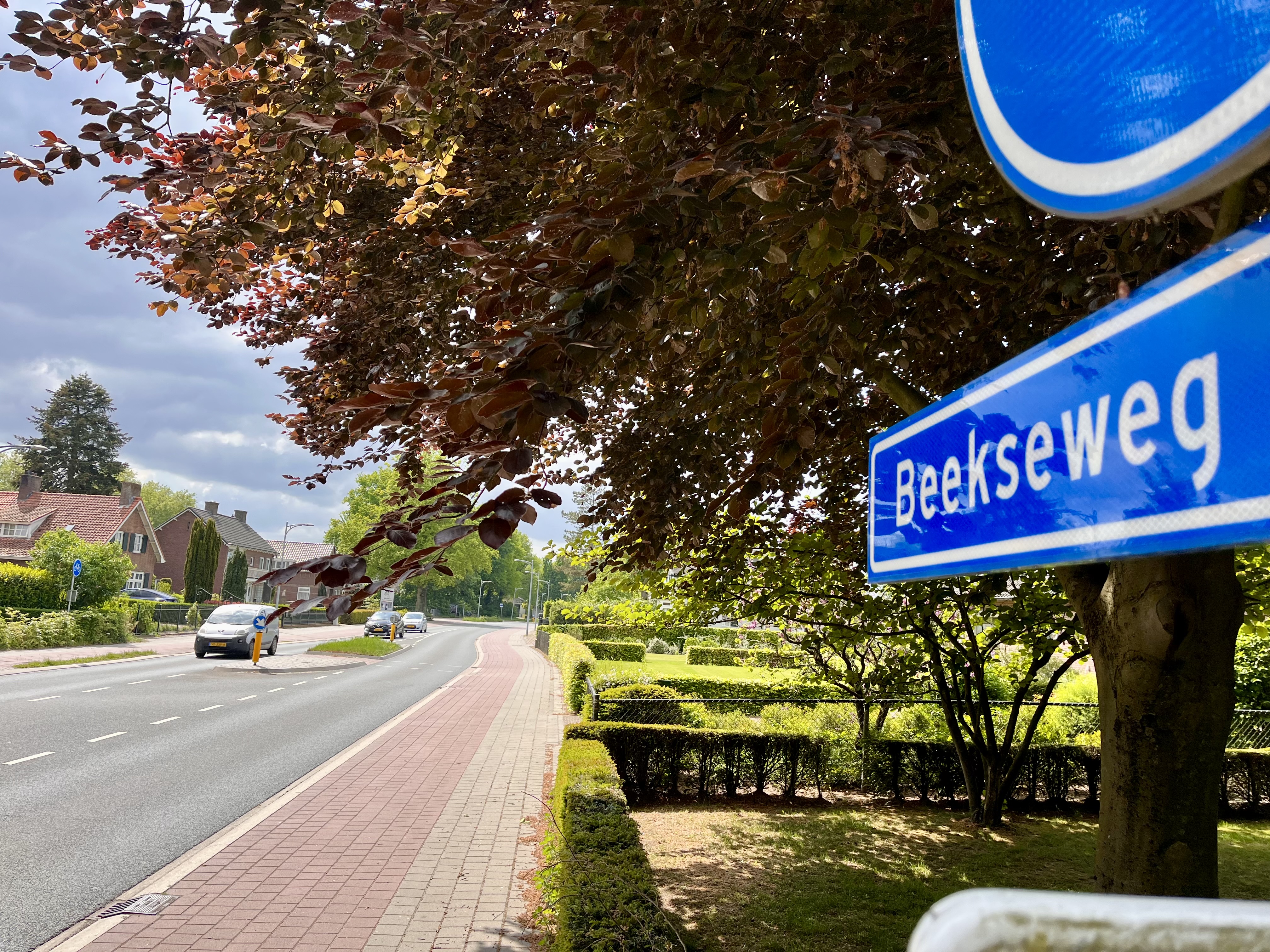
The province chose the centre of Diessen (Hilvarenbeek), where the N395 runs through the village. The route was divided into six road sections between the main junctions. Telraam recruited host households with a letter to residents, assessed each window for suitability and installed seven Telraam S2 indoor sensors. One road section was given two sensors; another measurement was taken just east of the village centre, on the same section as a temporary radar count. The province's own counts at both ends of the village (a permanent counting point on the west side and a roadside radar on the east side) served as a reference. Data was collected from May to August 2025.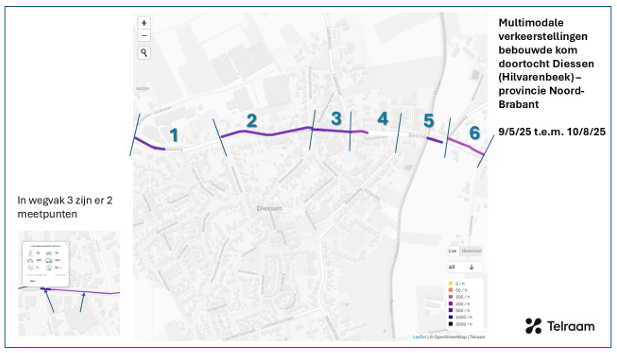
Results that hold up against radar
The province compared each pair of consecutive measuring points, from west to east. Daily traffic volumes followed the same pattern from sensor to sensor and matched the permanent counting point on the western edge of the village. On the east side, where Telraam and the radar measured the same road section, the 15-minute counts tracked each other closely throughout the day.
Two findings stand out:
- Heavy goods vehicles: Telraam's counts of heavy vehicles were comparable to the radar count of vehicles longer than 5.6 metres, and often slightly higher. The province concluded that both systems give a sound picture of freight traffic.
- Night-time hours: as expected, the radar recorded higher daily totals, because the current sensors cannot classify vehicles in the dark. In summer, some night-time passages are still recorded.
The sensor network also exposed measurement errors. Where one sensor showed a dip for a few days, the neighbouring sensors on the same road showed that it was a measurement problem rather than a genuine drop in traffic.
Estimates turned out too high
The key result concerns the estimation method. On an average weekday, the province estimated traffic through the village at around 10,200 motor vehicles. The Telraam sensors in the village measured about 7,750, some 24% fewer. On Saturdays and Sundays the difference was around 15%.
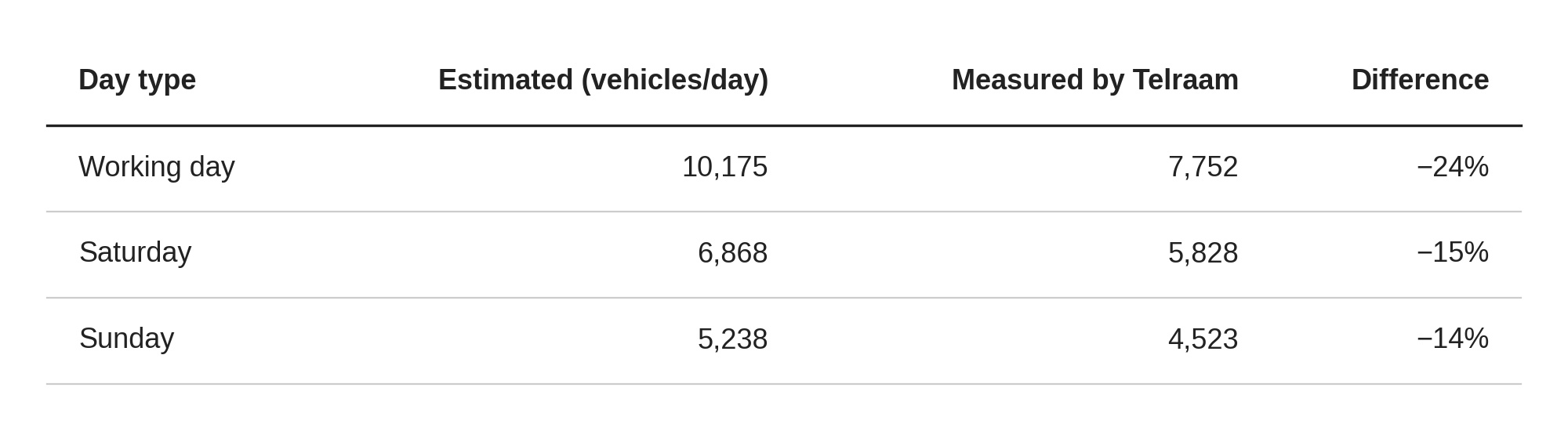
Even allowing for the missing night-time traffic, the difference is large enough for the province to conclude that the current estimate for Diessen is too high. Variation within the village itself turned out to be limited.
What the province gained
Telraam gave the province measurement data on a stretch of road that had until now been a blind spot. It showed that window-mounted sensors can deliver reliable traffic volumes and freight figures in places where conventional counting equipment is hard to deploy. It also gave a concrete reason to review how through-routes are estimated elsewhere on the provincial road network. The sensors also count cyclists and moped riders, although these fell outside the scope of this analysis.
Want to know more about this project?
Feel to free to get in touch.